
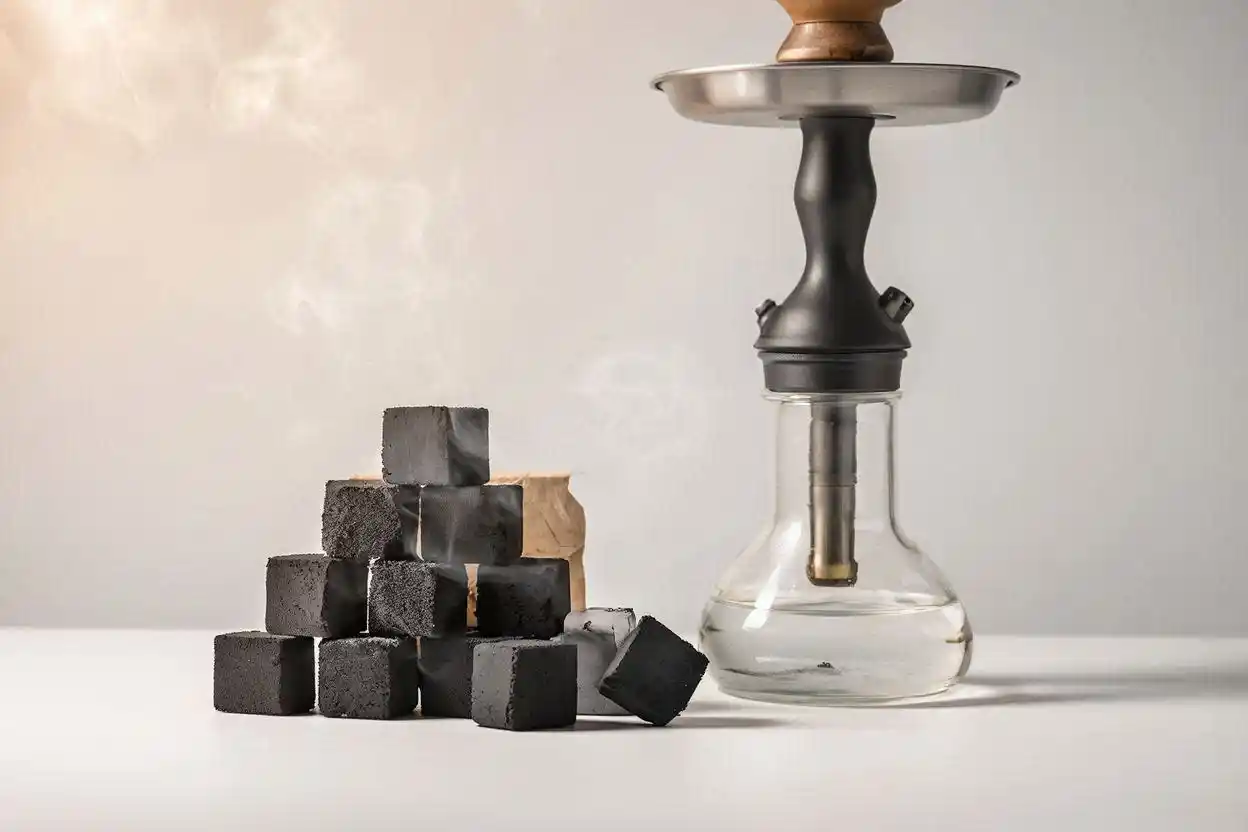
The coconut charcoal briquettes for hookah market continues to grow as global demand for premium hookah experiences rises. Consumers now prioritize clean-burning, eco-friendly fuel, making coconut-based briquettes a preferred choice. As a result, both users and business players increasingly explore this segment.
Moreover, the market offers strong opportunities for suppliers, distributors, and entrepreneurs. Understanding its dynamics helps you stay competitive and relevant.
Coconut Charcoal Briquettes Market Growth
In recent years, the hookah industry has expanded rapidly across Europe, the Middle East, and Asia. This growth directly boosts the coconut charcoal briquettes for hookah market.
Additionally, consumers shift away from traditional wood charcoal. They prefer coconut briquettes due to consistent heat and lower ash production. Consequently, the market continues to evolve with higher quality standards.
Why Coconut Charcoal for Hookah
Coconut shell charcoal offers several advantages over other fuel types. These benefits explain why it dominates the hookah segment.
Key advantages include:
- Longer burning time
- Minimal smoke and odor
- Low ash residue
- Environmentally friendly production
Because of these features, many users now actively choose Shisha charcoal over conventional options. This shift strengthens the position of coconut briquettes globally.
Drivers of Coconut Briquettes Market
Several factors drive the expansion of the coconut charcoal industry. First, lifestyle trends play a major role. Hookah lounges and social smoking culture continue to gain popularity.
Second, sustainability awareness influences buying decisions. Many consumers prefer products made from renewable resources like coconut shells. Therefore, producers who emphasize eco-friendly processes gain a competitive edge.
Furthermore, consistent product quality becomes a crucial factor. Buyers expect uniform size, stable heat, and reliable performance. Businesses that meet these expectations often secure long-term partnerships.
Challenges in Hookah Charcoal Market
Despite its growth, the market also faces several challenges. One major issue involves raw material supply consistency. Coconut shells depend on agricultural cycles, which can affect production.
In addition, quality control remains critical. Poorly manufactured briquettes may crack, produce excess ash, or fail to maintain heat. These issues can damage brand reputation quickly.
However, companies that invest in modern production technology can overcome these barriers. They ensure better compression, drying, and packaging processes.
Opportunities in Coconut Charcoal Briquettes
The coconut charcoal briquettes for hookah market opens multiple opportunities for entrepreneurs and exporters. Demand continues to rise, especially in premium segments.
You can explore several business models:
- Export-focused manufacturing
- Private label branding
- Distribution partnerships
- Online retail and B2B supply
To better understand industry insights and product variations, you can visit indobriquettescharcoal as a useful reference for trends and information. This helps you identify potential niches and strategies.
Future Coconut Briquettes for Hookah
Looking ahead, the market shows strong long-term potential. Increasing global interest in hookah culture will continue to drive demand.
At the same time, innovation in briquette design and packaging will enhance product value. For instance, faster ignition and improved durability become key selling points.
Moreover, sustainability will remain a central focus. Businesses that adopt eco-friendly production and transparent sourcing will likely dominate the future market.
Conclusion
The coconut charcoal briquettes industry presents a promising landscape for both consumers and businesses. Its growth stems from changing preferences, environmental awareness, and the demand for better hookah experiences.
By understanding market drivers, addressing challenges, and exploring strategic opportunities, you can position yourself effectively in this evolving sector.
