
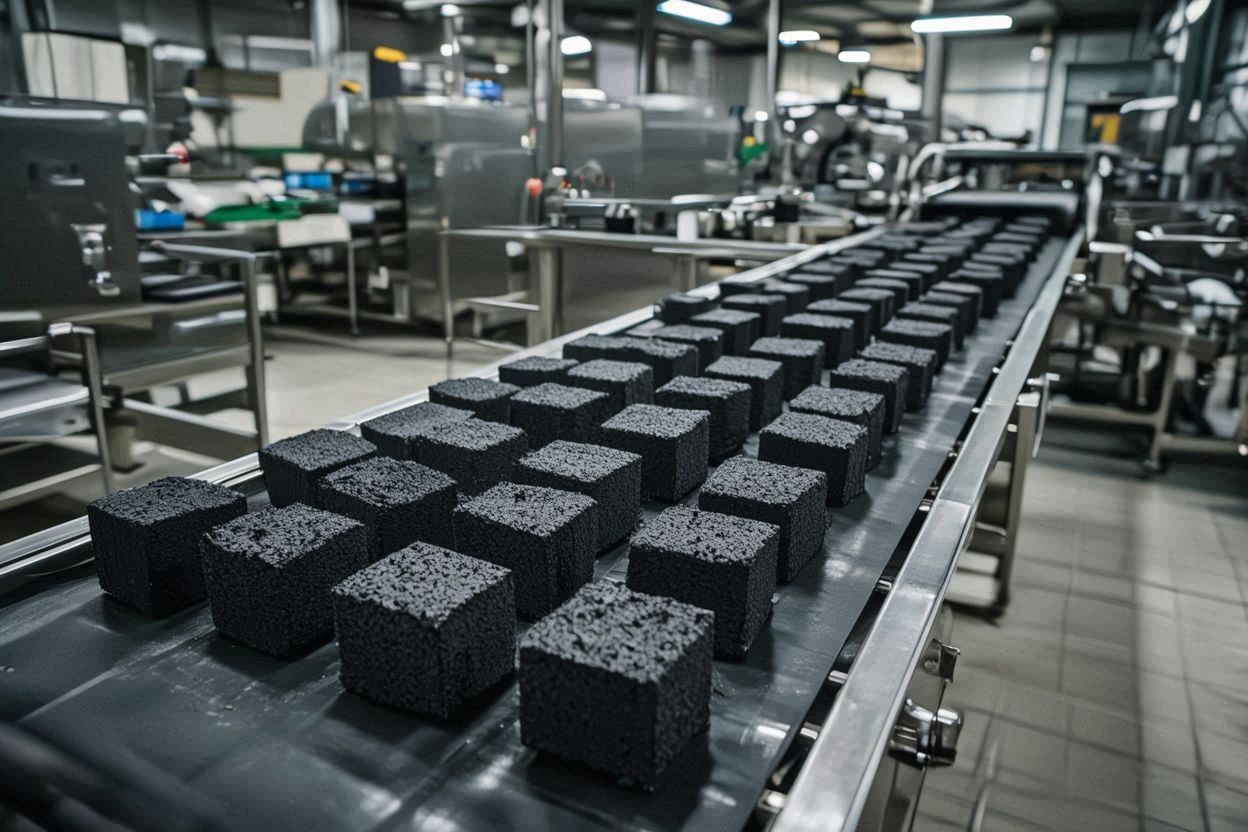
Coconut charcoal briquette producer indonesia plays an important role in the global charcoal industry. Indonesia stands as one of the leading producers of coconut shell charcoal briquettes because the country has abundant coconut resources and a well developed charcoal manufacturing sector.
Manufacturers in Indonesia convert coconut shell waste into high quality charcoal briquettes that serve many markets around the world. These briquettes deliver long burning time, stable heat, and very low smoke, which makes them ideal for shisha lounges, restaurants, and barbecue businesses.
As international demand increases, Indonesian producers expand production capacity and strengthen export networks to supply global buyers.
Indonesia as a Major Coconut Charcoal Producer
Indonesia produces millions of tons of coconuts every year. This large production provides a steady supply of coconut shells that manufacturers use as raw materials for charcoal briquettes.
Producers transform coconut shells into valuable fuel products instead of treating them as agricultural waste. This process supports sustainability and helps reduce environmental waste.
Because of these advantages, many international buyers choose Indonesian charcoal products for their consistent quality and competitive pricing.
Production Process of Coconut Charcoal Briquettes
A professional coconut charcoal briquette supplier follows strict production procedures to maintain product quality. Manufacturers start the process by carbonizing coconut shells to create high quality charcoal.
Workers grind the charcoal into fine powder and mix it with natural binding materials. Machines then press the mixture into briquette shapes such as cubes or hexagonal sticks.
Manufacturers dry the briquettes to reduce moisture content and improve burning performance before they package them for export.
Characteristics of High Quality Coconut Briquettes
Indonesian producers create coconut charcoal briquettes that offer several advantages for international buyers. One of the most important features is long burning duration. High density briquettes often burn for more than two hours depending on their size and shape.
Low ash content also becomes an important characteristic. Minimal ash keeps the burning process cleaner and helps users manage the charcoal more easily.
In addition, coconut shell charcoal briquettes produce very little smoke and do not create strong odors. These qualities make them suitable for hookah use and commercial cooking applications.
Export Opportunities for Indonesian Producers
The global market for coconut charcoal briquettes continues to grow rapidly. Countries in the Middle East remain major consumers because hookah culture stays highly popular in the region.
At the same time, European and North American markets increasingly choose coconut charcoal due to its sustainable production and efficient burning performance.
This growing demand motivates Indonesian producers to strengthen export operations and improve international distribution networks.
Reliable Supply and Global Distribution
Charcoal producers that focus on export markets usually build strong logistics systems. Suppliers prepare durable packaging that protects briquettes during long distance transportation and prevents product damage.
Export oriented companies also handle documentation, container loading, and shipping coordination to ensure smooth delivery to overseas buyers.
Companies such as jacoid.com provide information about coconut charcoal briquette production and export services for businesses seeking reliable suppliers in Indonesia.
Conclusion
Coconut charcoal briquette producer indonesia plays a vital role in meeting global demand for sustainable charcoal products. Indonesian producers combine abundant raw materials, experienced manufacturing, and strong export capabilities to deliver high quality coconut charcoal briquettes to international markets.
For importers and distributors, partnering with a trusted producer in Indonesia ensures stable supply, consistent quality, and long term opportunities in the global charcoal industry.
